
Summarize this blog post with
Overview
That is the gut of AI invisibility: your carefully researched content being consumed by generative search systems (think: Google’s AI Overviews, ChatGPT-style assistants, Perplexity, Gemini, etc.) without the user ever visiting your page.
The content is effectively “consumed” by the AI and the user, but your site sees none of the click data, the session, or the conversion opportunity. This isn’t hypothetical; major platforms are deploying generative overviews that summarize and answer user queries directly in search interfaces.
So yes, invisibility in AI results is literal: your brand might be in the answer (or it might not), but your analytics could show nothing.
I.What businesses stand to lose: the crisis of clicks and attribution
A. The Traffic Cliff
Remember when the “ten blue links” felt eternal ? Those days are being eroded. Generative engines synthesize answers from many sources and present a single, synthesized summary at the top of the results. That summary often satisfies user intent without requiring a click and that means a potential loss of high-volume, informational traffic that used to feed the top-of-funnel.
In short: the funnel gets shorter, often too short for your acquisition of metrics to notice. This shift has already been observed across multiple analyses of AI-driven search behavior.
B. Broken attribution and data gaps
If an LLM cites your site inside an answer but the user never clicks through, how do you count that as an exposure or a conversion touch ?
Conventional web analytics were never built for this. You’ll have brand mentions in text, but no UTM tags, no session data and incomplete conversion modeling. That creates blind spots in ROI calculations and weakens the feedback loop you depend on to refine content and product strategy.
Analysts are now calling for new dashboards and tools that can measure AI citations and conversational referrals because otherwise, marketing decisions will be based on partial data.
C. The commoditization of content
Worse: generative systems can take unique analysis and flatten it into a one-paragraph summary.
If your content isn’t structured to demonstrate provenance, unique value, or defendable data, it risks being distilled into a generic snippet that strips your edge away.
In effect, uniqueness becomes fungible unless you actively encode authority and traceability into the content itself.
II. What businesses stand to win: the authority playbook
Here’s the silver lining, the new landscape rewards trust, data, and proven provenance. If you play the long game, you can not only survive this shift; you can become the named source inside AI answers.
A. Becomingthe “Source of Truth”: Generative Engine Optimization (GEO)
Generative Engine Optimization (GEO), also called LLM Optimization (LLMo) or Answer Engine Optimization (AEO), reframes the goal.
Instead of optimizing for clicks and blue-link rankings, GEO optimizes for AI citations being the site an AI names when it synthesizes an answer. That means shifting focus from keyword stuffing to building a clear entity identity, robust factual claims and verifiable provenance that AI agents can rely on when composing an answer.
There’s both an academic and practical movement around GEO:
- Researchers define it as making content machine-friendly for closed-source generative engines.
- Practitioners are experimenting with structured presentations, source signals and unique data to earn citations.
B. The Strategic Content Pillars
- 1.Data-driven answers : Publish original research, unique datasets, calculators, and reproducible numbers. LLMs prefer verifiable facts; an original stat or dataset is a magnet for citation.
- 2.Structured data & Schema (JSON-LD) : Use schema to give unambiguous facts: author, publication date, methodology, dataset links and publisher identity. This helps AI systems attribute claims accurately. Google and other platforms are explicitly encouraging structured data as a means of surfacing high-quality content.
- 3.Authoritative authorship & publisher signals : Use bylines, bios with credentials and clear editorial processes. Tie authors to knowledge graph entities where possible. LLMs tend to favor sources that present clear attribution and expertise.
- 4.Provenance & citeable snippets : Present facts followed by short, cite-ready lines (e.g., “Study: X — Source: Company Y, 2025”). Make it trivial for an AI to include a short citation.
- 5.Defensible claims : Avoid vague claims. If you make a statistically precise point, show the methodology and raw numbers. It’s harder for AI to safely lift and summarize content that lacks evidence.
III. Actionable strategies for the new ecosystem
You don’t have to redesign everything. Start with a mix of practical, technical and measurement moves.
Rethink content format, make it machine-readable and valuable.
Shift some content creation velocity into formats that are easy to synthesize: clear Q&A pages, comparison matrices, step-by-step definitive guides, short data-led summaries followed by expanders.
Think “answer-first, expand-later.” That makes your content more likely to be chosen as a source for AI summaries.
A. Audit for authority
Identify the top pages that should act as your “source of truth.”
For those pages: tighten facts, add schema, make author credentials explicit and secure high-quality backlinks. Treat these pages like product features, they’re what you want the web and the models to remember.
B. Measure citations, not just clicks
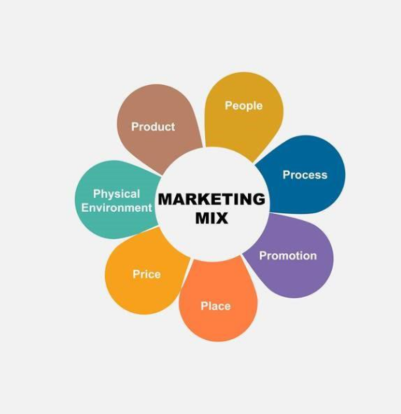
Create new KPIs: AI mentions, assistant-citation rate (where available), voice-answer appearances and assisted conversions estimated via Marketing Mix Models.
Tools are beginning to emerge that try to sample AI outputs and track which domains are being cited; consider adding these to your analytics stack and align measurement with MMM ( Marketing Mix Modeling ) to approximate downstream impact.
Search Engine Journal and industry analysts are already pointing marketers toward citation-focused KPIs.
C.Leverage paid media (the safety net)
Organic visibility will be less predictable during this transition.
Consider increasing investment in performance-oriented paid channels (e.g., AI-driven PPC and Performance Max campaigns) to stabilize traffic while your GEO work matures. Paid media remains a reliable acquisition lever as generative SERPs evolve.
D. Technical must-haves: structured data, speed and provenance
- Implement robust schema (Article, Dataset, FAQ, HowTo, Organization, Person). JSON-LD is the recommended format.
- Improve Core Web Vitals: speed and mobile usability signal quality to both search engines and downstream AI trust models.
- Provide machine-readable citations: link to raw data, include DOI-like identifiers for reports, and keep transcripts and references available in plain text. These frictionless signals matter.

IV. Implementation checklist (quick wins & long game)
A.Quick wins (0–3 months)
- Add clear author bios + credentials to pillar pages.
- Add JSON-LD for Organization, Article and Dataset where applicable.
- Convert top-performing long-form posts into Q&A + short summary + structured references.
- Run a backlink push for pillar pages (editorial citations > syndication links).
B.Medium game (3–9 months)
- Publish original data or a small proprietary study (even a well-done survey can work).
- Instrument experiments to track estimated “AI lift” via brand lift studies and MMM.
- Prototype a “citation-ready” content template for new pages.
C.Long game (9–18 months)
Invest in entity-building: claim and populate Knowledge Graph entries, secure authoritative references in third-party data sources, and maintain a continuous cadence of defensible content.
Build tools or micro-products (calculators, visual datasets) that are naturally linkable and hard to re-create.
V. The role of trust & why brands disappear from AI search
Brands vanish from AI search for two main reasons:
- 1.Lack of machine-readable trust signals
- 2.Absence of unique, defensible data.
If everything you publish looks like everyone else’s blog post, LLMs have no reason to pick you as the source. Conversely, brands that are explicit about the editorial process, citeable data and author credentials are more likely to be surfaced.
Stop writing for the human scroll only; write for machines that decide which humans see which content.
Subscribe to our newsletter and gain access to strategic insights, exclusive analyses, and expert tips to enhance your online presence.
Conclusion
AI invisibility is a wake-up call. The old metric of “pageviews equals success” is no longer sufficient. The new frontier rewards entities that think like librarians and scientists: organize facts, publish defensible data, label your sources and make your content trivially citeable.
Treat your site as a structured knowledge base not just a traffic machine. That shift won’t be painless, but it’s survivable and profitable for the companies that do it well. Industry writing and research already point to GEO/LLMo/AEO as the practical frameworks for making that transition.
Next step ? Consider a structured audit that:
- (a) identifies your top “source of truth” pages
- (b) applies JSON-LD and author provenance
- (c) builds a small original dataset (or report) to anchor citation.
If you want help mapping that audit to a content roadmap and KPI suite, working with a strategic partner (like Eminence) to deploy a GEO/Entity SEO strategy is a clear option. Contact-us !
FAQs
Q1: What is the fastest way to reduce the risk of AI invisibility?
Start with three things: add clear author bios with credentials, add JSON-LD schema for your pillar pages, and produce one piece of original data or research. Those moves increase both trust signals and citation likelihood.
Q2: Will writing shorter summaries hurt my organic SEO?
Not if you structure them smartly. Use an “answer-first” summary (50–150 words) followed by expandable sections that dive deep. The summary helps AIs; the deep content keeps human readers and conversion funnels intact.
Q3: Can I track when an AI cites my site?
Some third-party tools and sampling techniques can approximate AI citations, and larger platforms will hopefully introduce more transparency over time. In the meantime, pair brand-lift studies, MMM and manual sampling of major AI assistants to estimate impact.
Q4: Should I stop chasing traditional SEO signals like backlinks and keywords?
No — backlinks and relevance still matter. But prioritize backlinks to your pillar “source” pages and shift some content effort from pure keyword volume to demonstrable authority and structured evidence.
Q5: How does paid media fit into the strategy?
Paid media is your stability lever during transition. Performance Max and AI-optimized PPC can plug immediate acquisition gaps while you build the long-term authority that GEO requires.